
UK Gambling Sector Posts £4.3 Billion GGY Surge in Q2 2025/26 While Participation Stays Firm at 48%
The Latest Quarterly Snapshot from the Gambling Commission
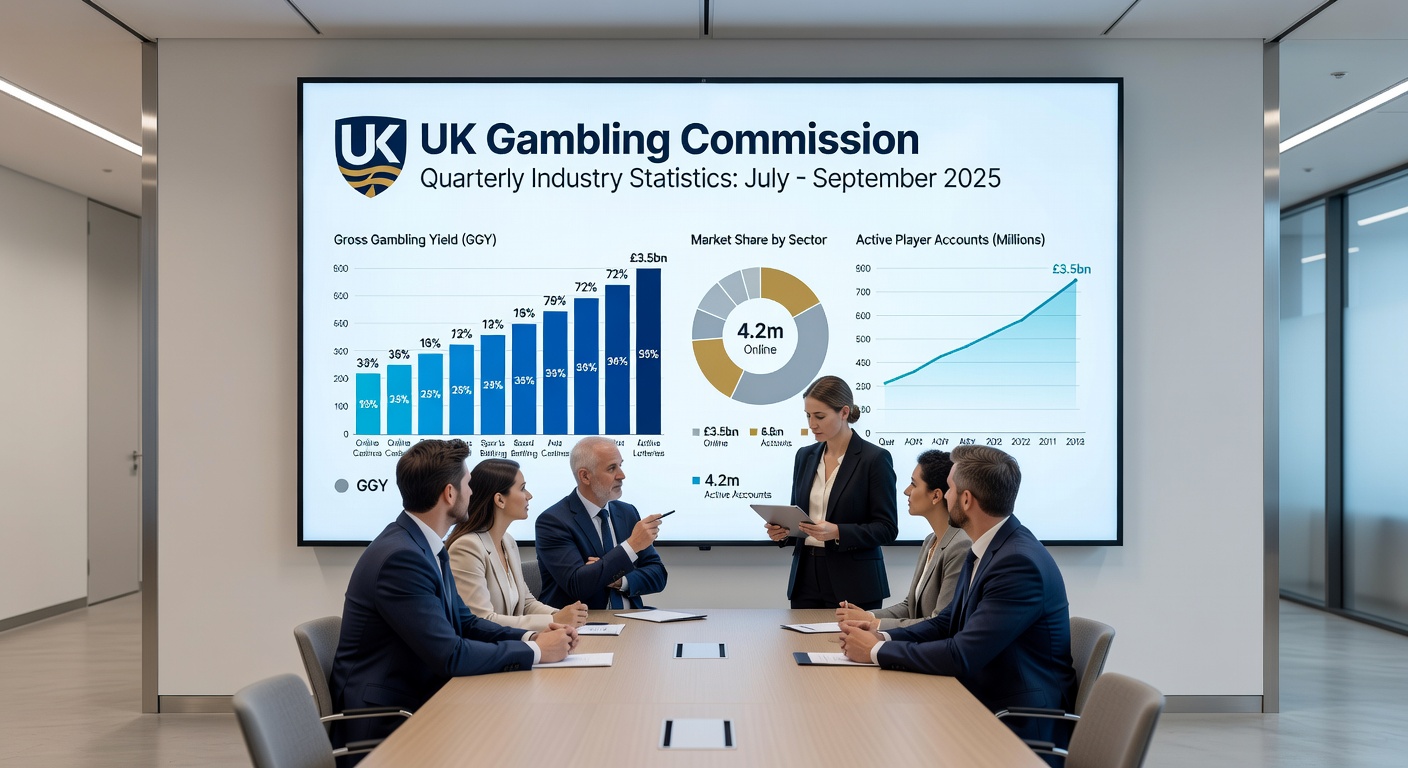
The UK Gambling Commission dropped its quarterly industry statistics in February 2026, covering the period from July to September 2025—what amounts to Q2 of the financial year running April 2025 to March 2026—and those figures paint a picture of steady growth amid familiar player habits; gross gambling yield, or GGY, for Great Britain's customer-facing gambling industry clocked in at £4.3 billion, marking a solid 6.6% jump from the same quarter a year earlier, with the remote sector leading the charge while overall participation levels held remarkably stable.
But here's the thing: this isn't just a headline number; data from the accompanying Gambling Survey for Great Britain (GSGB) Wave 3, spanning July to October 2025, reveals that 48% of adults engaged in some form of gambling during that window, a figure that mirrors previous waves and underscores consistency in how people interact with betting and gaming options across the board.
Experts tracking these releases note how such stability in participation, paired with revenue upticks, signals a maturing market where online channels continue to flex their muscles, especially as the financial year pushes toward its March 2026 close.
Breaking Down the £4.3 Billion Gross Gambling Yield
Gross gambling yield represents the net win for operators after payouts—what's left once stakes and winnings balance out—and for Q2 2025/26, that pot swelled to £4.3 billion across Great Britain's regulated sectors; figures from the Industry Statistics Quarterly Report pinpoint the remote bingo, casino, and betting categories as the primary drivers, pushing totals higher even as land-based venues navigated their own dynamics.
Take the remote sector: it didn't just contribute; it propelled the overall increase, with online platforms capturing more activity from players who favor the convenience of apps and websites over physical trips to bookies or casinos, and observers have seen this pattern build over recent years where digital access expands reach without proportional jumps in total participants.
What's interesting here is the year-on-year comparison—6.6% growth means £4.3 billion edges out the prior period's yield by roughly £265 million, a chunk that breaks down into gains from slots played remotely, football bets placed via mobile, and other fast-paced online pursuits that keep engagement humming; land-based GGY, while not specified in isolation, contributes to the total yet trails the remote boom, reflecting shifts toward hybrid experiences where people mix trips to high streets with home-based sessions.
And yet, as the data rolls in quarter by quarter, those who've studied the trends point out how seasonal factors—like summer sports events or lottery draws—often layer on top of these baseline increases, setting the stage for what might unfold by March 2026.
GSGB Wave 3 Uncovers Steady Participation and Key Behaviors
Participation sits at 48% in the Gambling Survey for Great Britain Wave 3, covering adults from July to October 2025, and that number holds steady when stacked against earlier waves, showing no wild swings despite the revenue growth elsewhere; researchers behind the survey highlight how this stability emerges from a broad mix of activities, with slots and lotteries drawing consistent crowds—slots, in particular, resonate online where quick spins appeal to casual players, while lotteries maintain their evergreen pull through national draws and scratch cards alike.
Turns out, the survey delves deeper into behaviors: data indicates slots command a notable share of remote activity, often among those gambling pastimes that blend accessibility with high engagement, and lotteries, whether online purchases or in-store tickets, anchor the any-gambling metric since they represent low-stakes entry points for many; people who've analyzed past GSGB waves observe that while overall rates don't budge, nuances emerge—like how younger demographics lean into digital slots, whereas lotteries cut across age groups with their simplicity.
So, with 48% dipping into gambling at least once in the period, the survey provides a window into market trends where remote options expand without inflating headcounts dramatically, and that's significant because it suggests operators focus on retention and spend per player rather than chasing new converts en masse.
One study from prior waves, for instance, revealed similar patterns where slots participation hovered around key thresholds, fueling GGY without participation spikes, a dynamic that plays out again here as the remote sector's growth aligns neatly with these behavioral insights.
Sector-Specific Drivers and Broader Market Signals
Remote growth dominates the narrative, but the total GGY encompasses betting on horses and football—those staples that thrive both online and in shops—alongside casino games and bingo halls adapting to digital shifts; figures show remote betting alone contributes heftily to the 6.6% rise, with platforms handling more volume as smartphone usage peaks during evening hours or match days.
But here's where it gets interesting: non-remote sectors, including arcades and tracks, hold their ground amid the online surge, ensuring the industry's breadth remains intact; experts note that hybrid players—those betting in-branch one day and app-based the next—bridge these worlds, stabilizing yields across categories even as remote pulls ahead.
Looking ahead to March 2026, these Q2 results position the full-year trajectory positively, especially if remote momentum sustains through winter sports and holiday lotteries; data from the report underscores how quarterly builds compound, with Q2's £4.3 billion serving as a benchmark against Q1 and upcoming releases.
There's this case where analysts cross-referenced GSGB data with yield stats, finding that stable 48% participation correlates with targeted growth in high-yield activities like slots, where average session values inch up without broader uptake; it's not rocket science, yet it highlights efficiency in how the market operates.
Implications for Players, Operators, and Regulators
For operators, the 6.6% GGY lift validates investments in remote tech—think seamless apps and live streaming—while the steady 48% from GSGB signals where marketing dollars land best, on slots promotions or lottery tie-ins that resonate with existing players; regulators at the Gambling Commission, through these publications, track safer gambling metrics alongside yields, ensuring growth doesn't outpace protections.
Observers point out that Wave 3's behavioral data informs policy tweaks, like enhanced remote safeguards, as participation stability allows focus on problem gambling pockets within slots or betting; and with the FY wrapping in March 2026, Q3 and Q4 will test if this quarter's momentum holds amid economic currents or seasonal dips.
People in the industry often discover that such reports spark strategic pivots—operators ramping remote slots based on GSGB trends, for example—yet the core takeaway remains the balanced picture: revenue climbing, participation level, remote leading the way.
Conclusion
The UK Gambling Commission's Q2 2025/26 statistics deliver clear signals—£4.3 billion GGY up 6.6% year-on-year, powered by remote channels, alongside GSGB Wave 3's rock-solid 48% participation enriched by slots and lottery details—and as February 2026's release settles in, stakeholders eye the path to March's year-end with data-driven clarity; these numbers, grounded in rigorous tracking, illuminate a sector that's growing methodically, adapting smartly, and staying attuned to player realities across Great Britain.