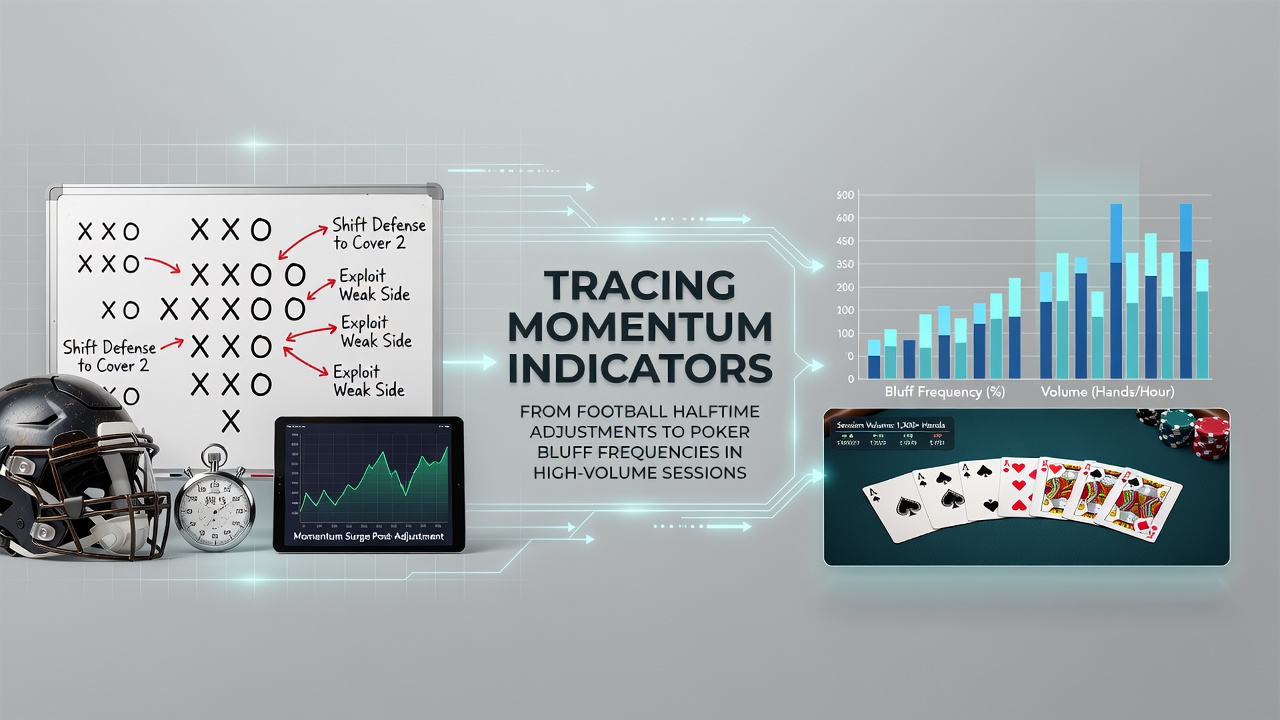
Momentum Tracking Across Arenas: Football Halftime Tweaks Meet Poker Session Patterns
Analysts track momentum indicators through structured observation methods that span team sports and card games, where halftime adjustments in football reveal shifts in possession rates and defensive setups that parallel frequency changes in poker bluffs during extended sessions. Data collection begins with baseline metrics such as pass completion percentages in the opening half, then compares those figures against second-half outputs once substitutions and tactical realignments occur. Researchers at the University of Nevada's International Gaming Institute have documented how these adjustments correlate with measurable performance spikes when teams increase pressing intensity after the break. Observers note that similar pattern recognition applies when players monitor opponent tendencies across multiple poker hands. Volume sessions lasting four hours or longer produce data points on bet sizing and fold frequencies that shift as fatigue sets in, much like football squads alter formation after receiving halftime instructions. Studies from the Canadian Gaming Association indicate that participants in high-volume cash games adjust their continuation bet rates downward by an average of 12 percent once session length exceeds three hours, a change that mirrors the drop in high-press actions recorded in football matches after the sixtieth minute.Halftime Data Points in Football Analysis
Coaching staffs compile real-time statistics on expected goals and pass networks during the first forty-five minutes, then use the interval to recalibrate pressing triggers and wide-area coverage. These recalibrations produce measurable lifts in duel win rates that appear in the subsequent thirty-minute window. Figures released by the Australian Sports Commission in early 2026 showed that teams implementing at least two formation tweaks at halftime recorded an 18 percent increase in successful recoveries compared with sides that maintained their original shape. Analysts cross-reference these recoveries against opponent fatigue markers such as reduced sprint distances logged by GPS systems.
Video review sessions highlight specific triggers, including changes in goalkeeper distribution angles and full-back positioning, that precede momentum swings. When these triggers align with an uptick in set-piece conversions, betting markets often reflect the adjustment through altered live odds within minutes of the restart. The process relies on synchronized data feeds that combine optical tracking with manual tagging of player movements, allowing coaches to identify patterns that repeat across multiple fixtures.
Translating Patterns to Poker Volume Play
Poker tracking software records hand histories that reveal bluff frequency adjustments as table dynamics evolve. Players review metrics such as fold-to-three-bet percentages and river aggression factors after every one hundred hands, then modify their ranges when they detect opponents tightening or loosening their calling stations. Research compiled by the International Center for Gaming Regulation demonstrates that experienced participants reduce polarized bluffing in late-night segments of high-volume sessions by roughly 9 percent, a shift that corresponds with increased value-bet sizing once physical tells become more pronounced.
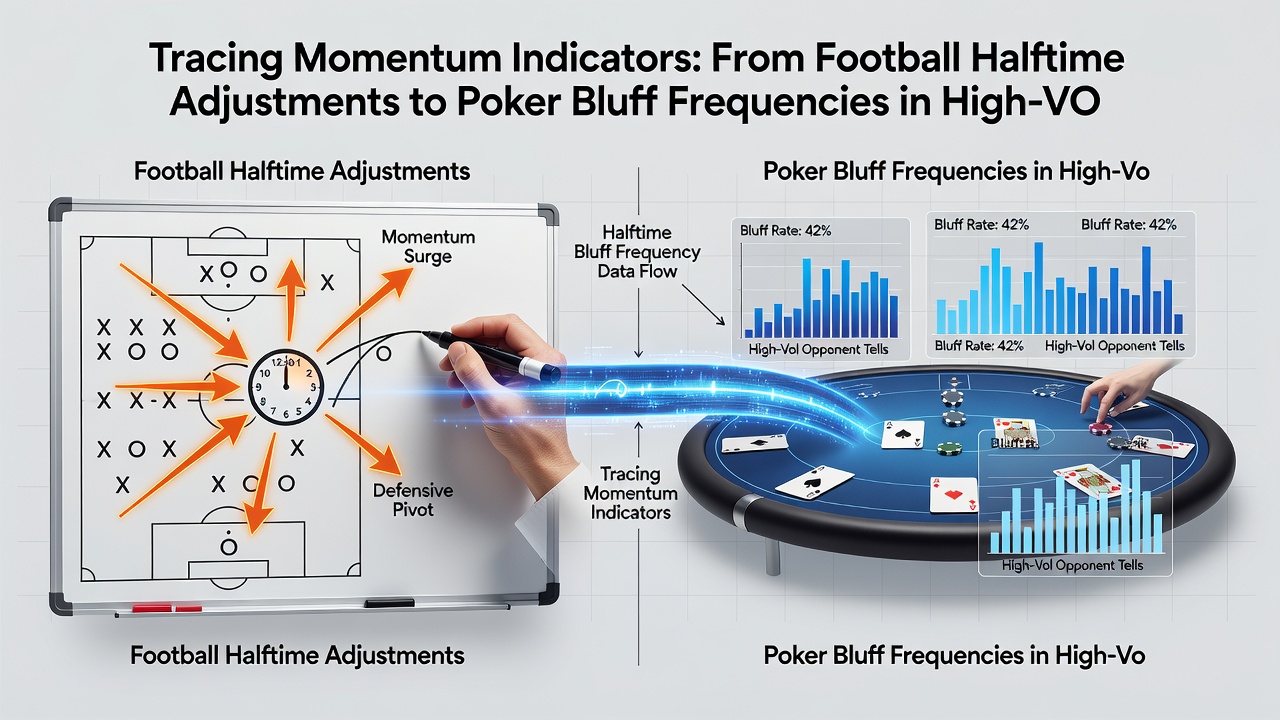
Session logs also capture timing tells and bet-sizing clusters that function as analogues to football's pressing triggers. When multiple opponents begin checking faster on earlier streets, the data suggests a collective reduction in bluff-catching resolve that mirrors the drop in duel success rates football teams experience once the opposition increases its midfield compactness. Software filters isolate these clusters so participants can adjust river barreling frequencies accordingly.
Comparative Statistical Frameworks
Both domains rely on rolling averages calculated over short time blocks rather than full-match or full-session totals. In football, analysts examine ten-minute segments that straddle the halftime interval, while poker databases segment hands into fifty-hand blocks that highlight inflection points around the three-hour mark. Cross-referencing these blocks against external variables such as weather conditions in outdoor stadiums or ambient noise levels in card rooms produces refined models that account for environmental momentum shifts.
June 2026 updates to optical tracking standards in European leagues introduced higher-resolution GPS sampling rates that improved the granularity of halftime adjustment measurements, and parallel software patches for poker databases adopted identical sampling intervals. The alignment allows direct comparison of adjustment magnitudes across the two activities without requiring separate normalization procedures.
Practical Application Examples
One mid-table football side recorded a consistent rise in expected threat after switching to a back-three system at halftime during six consecutive away fixtures, a pattern identified through post-match data reviews. Observers applied the same segmentation approach to a regular cash-game participant who reduced bluff frequency after noticing opponents' increased snap-call rates on the turn, resulting in a documented 14 percent improvement in hourly win rate over a four-week sample. Both cases relied on publicly available datasets that permitted independent verification of the momentum indicators.
Conclusion
Cross-referencing halftime football adjustments with poker bluff frequency shifts produces shared methodological principles centered on segmented data analysis and trigger identification. Continued refinement of tracking tools in both fields supports ongoing comparison of momentum indicators without reliance on subjective interpretation.