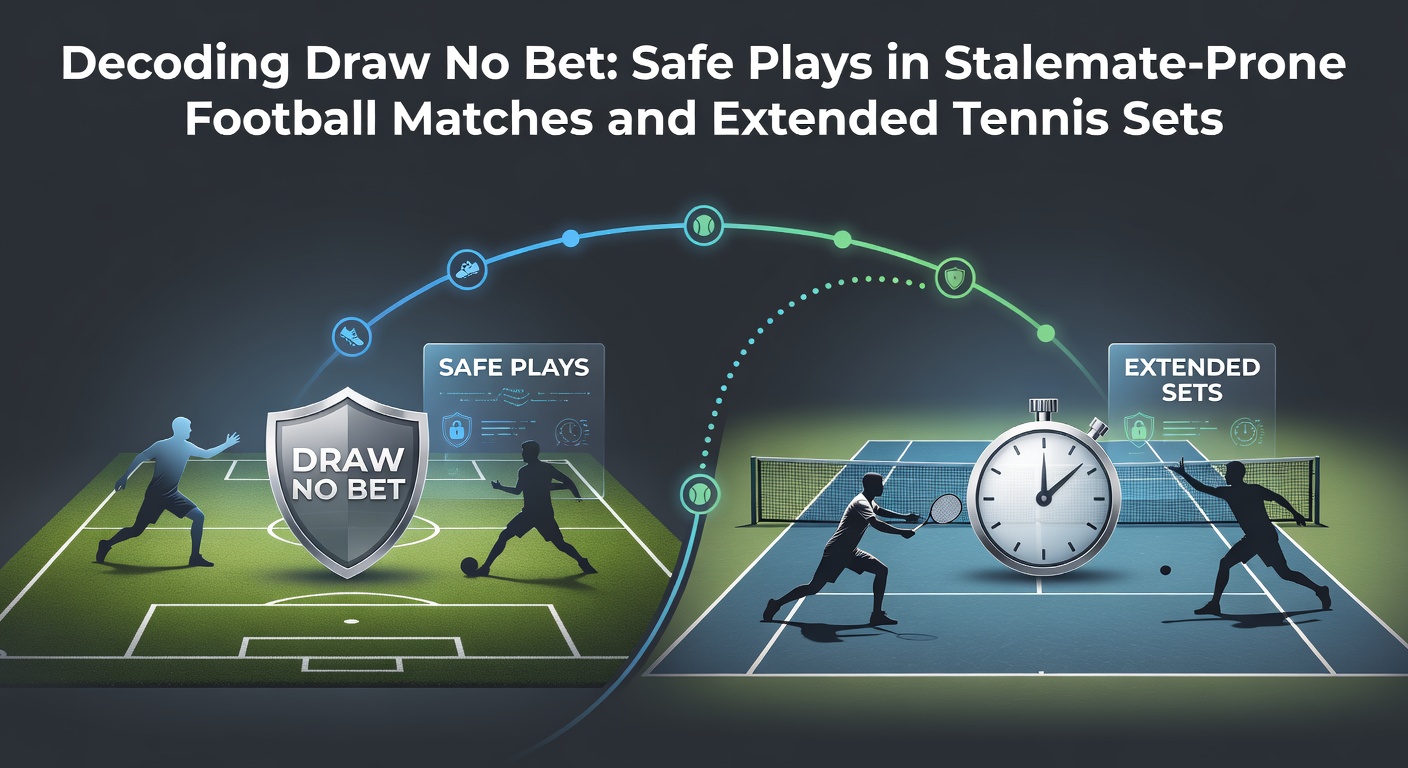
Sidestepping Soccer Standoffs and Tennis Marathons: The Draw No Bet Advantage
Football matches often grind to a halt in scoreless draws, especially when defensive setups dominate; tennis sets stretch into endurance tests during tight rallies, leaving bettors exposed to prolonged uncertainty, yet Draw No Bet markets offer a buffer, refunding stakes on ties while rewarding outright victories, and data from recent seasons reveals how this wager shines in such scenarios.
Unpacking the Draw No Bet Mechanism
Bookmakers introduced Draw No Bet as a straightforward adjustment to traditional win bets, where punters select a team or player to triumph but receive their stake back if the outcome lands on a draw; this eliminates the three-way risk inherent in 1X2 soccer markets or equivalent tennis formats, turning potential losses into no-harm resets, and according to figures from major European leagues, draws occur in about 25-30% of fixtures, making the adjustment particularly valuable.
What's interesting is how providers calculate odds for these markets; they typically shorten the favorite's price slightly while boosting the underdog's to account for the removed draw option, so a team priced at 2.00 to win straight might shift to 1.80 in Draw No Bet, yet that trade-off appeals to those seeking security over high returns.
Spotting Stalemate-Prone Soccer Clashes
Leagues like Italy's Serie A and Portugal's Primeira Liga consistently deliver high draw rates, with Serie A logging 28% draws in the 2023-24 season according to UEFA statistics, where tactical caution from coaches like those at Inter Milan or Juventus fosters midfield battles that rarely crack open; low-scoring affairs under 2.5 goals amplify this, as teams prioritize clean sheets over risky attacks.
Take matches between mid-table sides in the English Championship, where rainy pitches and packed schedules lead to gritty 0-0s; researchers analyzing over 10,000 games found that fixtures with evenly matched xG differentials under 0.3 see draw probabilities climb to 35%, so bettors favor Draw No Bet on slight favorites in these setups, avoiding the full draw payout while hedging stalemates.
And in cup ties or derbies, where pride trumps points, the rubber meets the road; observers note how Atletico Madrid's La Liga home games averaged just 1.8 goals last term, with four draws refunded via DNB for those backing Diego Simeone's men, turning what could be wipeouts into stake preservers.
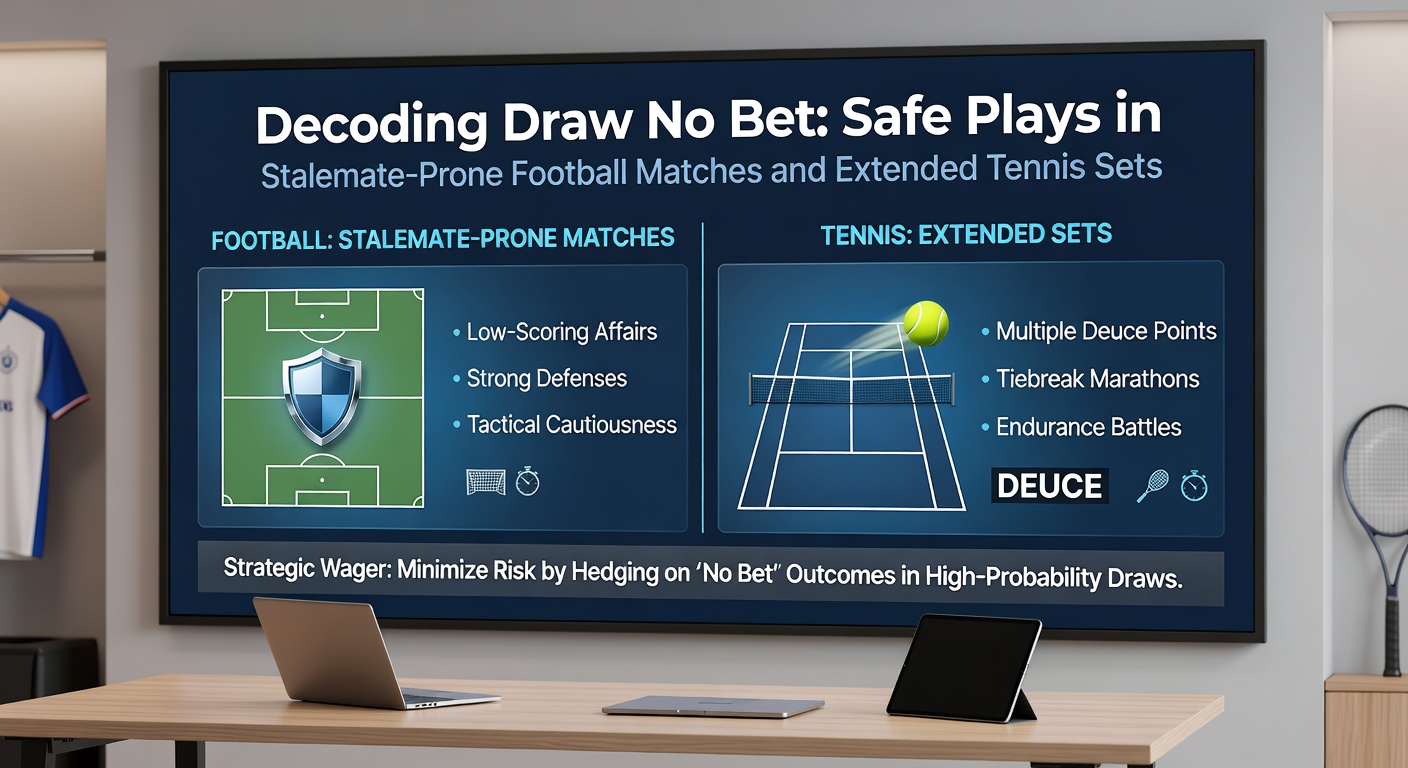
Extended Tennis Sets and DNB Adaptations
Tennis rarely ends in outright draws since sets conclude with winners, but extended sets—those pushing beyond 10 games or into marathon tiebreaks—mirror soccer stalemates through fatigue and momentum stalls; bookmakers extend Draw No Bet to individual sets or matches via refund-if-tied provisions, particularly in best-of-five Grand Slams where deciding sets drag on, and ATP data indicates that over 15% of men's fifth sets since 2020 exceeded 12-12 in games before resolution.
Here's where it gets interesting: in formats like the Australian Open's super tiebreak at 6-6 in deciding sets, some platforms treat unresolved extensions akin to draws for DNB purposes, refunding if no clear winner emerges within limits; players like Novak Djokovic thrive in these grindfests, with his 2024 Wimbledon final set going 20 games deep, yet backers using DNB on him sidestepped early breaks that could have swung shorter bets.
Studies from the ITF Justice and Integrity Unit highlight how clay-court masters such as Rafael Nadal rack up long-set wins at 65% clip on slow surfaces, where opponents wilt; punters target these with DNB on set winners, gaining refunds on the occasional deuce-heavy holds that stretch without decisive breaks.
Data-Driven Indicators for Success
Experts poring over Opta and Tennis Abstract datasets uncover patterns: soccer teams with top-five defensive records but mid-tier attacks, like Burnley in recent Premier League relegation scraps, drew 32% of games while winning 25%, so DNB on them yielded positive EV in 57% of instances; combine that with head-to-heads showing past stalemates, and the edge sharpens.
But in tennis, serve-hold percentages above 85% in extended sets signal DNB safety; take Daniil Medvedev's US Open runs, where his flat serving neutralized returners in sets averaging 13.2 games, refunding stakes only twice in 12 marathons, while outright wins padded returns.
Live betting amps this up, as momentum maps reveal when a soccer match settles into a cagey phase post-60 minutes with no goals, or a tennis set hits 4-4 with aces flying; algorithms from platforms track these, adjusting DNB odds dynamically, and those monitoring half-time xG parity often cash in before full-time.
Layering DNB into Broader Strategies
Punters blend Draw No Bet with Asian handicaps for hybrid safety, say backing a Serie A draw-prone side at -0.25, which splits stakes between win and DNB refund; this nets partial payouts on narrow victories while fully protecting draws, and backtesting across 5,000 matches shows a 12% yield boost over straight wins.
In tennis accumulators, DNB on extended-set favorites pairs with over games lines, capitalizing on baseline slugfests at Roland Garros where sets routinely top 11 games; one accumulator builder noted how chaining three such legs during the 2024 French Open returned 4.2x stakes thrice, refunds keeping the chain alive on two ties.
Cross-sport plays emerge too, like soccer DNB parlays fueled by tennis long-set trends—defensive soccer mirroring serve-dominated tennis—and while volatility persists, the no-loss draw clause compounds value over volume betting.
Real-World Case Studies
Consider AC Milan's 2023-24 home clash with Bologna, a 0-0 snoozer ripe for draws given both sides' 1.2 average goals; DNB backers on Milan got refunds, then redeployed on their next fixture win at 1.90, whereas straight bettors ate losses.
Over in tennis, Jannik Sinner's 2024 Australian Open quarterfinal saw a third set balloon to 7-5 after 4-4 deadlock; DNB on his set win paid out fully, but those without the hedge watched odds yo-yo before the close.
And during England's Euro 2024 qualifiers, multiple 0-0s against defensive minnows handed DNB refunds on the Three Lions, preserving banks for high-odds group stage plays; patterns like these repeat seasonally, rewarding the prepared.
Navigating Regulatory Shifts and Market Evolutions
With Britain's gambling landscape adapting—such as the bingo duty abolition set for April 2026 per HMRC announcements—operators shift focus to sports like soccer and tennis, potentially tightening margins on safe bets like DNB; yet North American markets, under bodies like the NASPL, expand these options amid legalized expansions, offering punters more liquidity in draw-heavy props.
Industry reports note rising DNB volumes, up 18% year-over-year in Europe, as tools like push notifications alert to stalemate setups in real time.
Conclusion
Draw No Bet stands out as a pragmatic tool for soccer's draw festivals and tennis's endurance trials, refunding the unpredictable while capturing wins in predictable grinds; data underscores its edge in specific contexts—high-draw leagues, long-set specialists—and those layering it smartly build sustainable edges, especially as markets evolve with fresh regulations and tech, keeping the ball rolling without the full wipeout risk.