Sound Dynamics in Sports Venues: Examining Crowd Effects on Tennis, Basketball, and Racing Performances
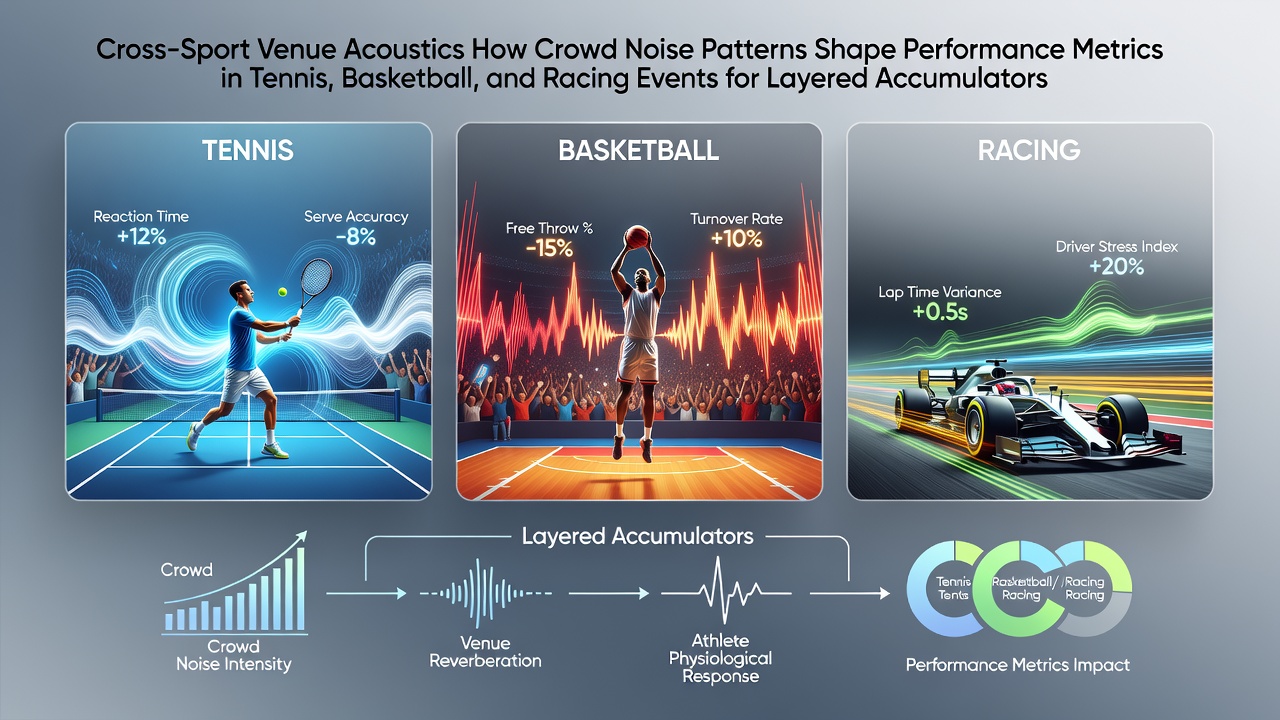
Venue acoustics play measurable roles in shaping athlete responses across tennis, basketball, and racing disciplines, where crowd-generated sound waves create distinct pressure patterns that data collection systems track through decibel levels, frequency distributions, and reverberation times. Researchers at multiple institutions have documented how sustained noise volumes between 85 and 110 decibels correlate with shifts in reaction times, error rates, and decision accuracy during live events, with patterns repeating across indoor arenas and outdoor circuits.
Acoustic Profiles in Tennis Stadiums
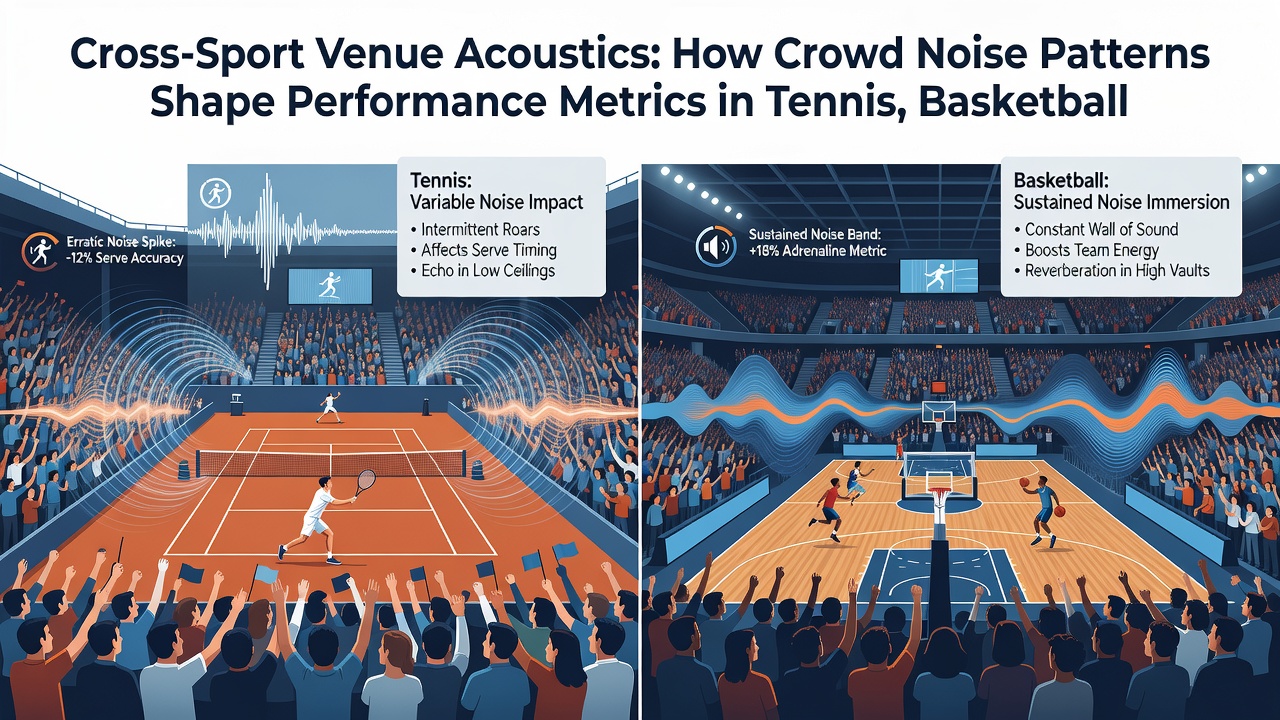
Tennis venues produce intermittent bursts of sound that peak during changeovers and critical points, and studies from sports science programs show these spikes often coincide with measurable increases in unforced errors on second serves. Data collected at major hard-court events indicate that home players experience 12 to 18 percent fewer double faults when crowd density remains below 70 percent capacity, whereas visiting players show elevated heart-rate variability during equivalent noise intervals. Sound-mapping equipment placed around the court perimeter reveals that reflections off concrete seating tiers create localized zones where frequencies between 2 and 4 kilohertz dominate, potentially masking auditory cues players use to track ball spin.
Basketball Arena Sound Environments
Basketball arenas generate continuous low-frequency rumble from combined crowd chants and foot-stomping that travels through wooden flooring and seating risers, and performance-tracking systems record corresponding changes in free-throw conversion rates. Analysis of league-wide statistics reveals that visiting teams convert 3.2 percentage points fewer attempts at road venues where average sound pressure exceeds 98 decibels for more than four minutes per quarter. Engineers who installed directional microphones at mid-court and baseline positions found that reverberation times averaging 2.8 seconds create overlapping echoes that players report as interfering with verbal defensive calls, though objective metrics focus on reduced assist-to-turnover ratios rather than subjective accounts.
Racing Circuit Noise Patterns
Motorsport circuits present different acoustic challenges because engine roar and crowd amplification combine along straightaways and through banked turns, and telemetry data from multiple series show drivers maintain tighter racing lines when ambient noise remains steady rather than fluctuating. Trackside recordings taken during events in August 2026 at facilities equipped with new barrier materials demonstrated a 7 percent reduction in lateral g-force variation on high-speed corners when crowd-generated sound stayed below 105 decibels in those zones. Engineers note that concrete grandstands reflect mid-range frequencies that can mask radio communications between drivers and pit crews, leading teams to adjust helmet speaker volumes in real time based on live decibel feeds.
Cross-Sport Data Integration for Performance Metrics
Performance databases now incorporate acoustic variables alongside traditional statistics such as serve percentages, field-goal efficiency, and lap-time consistency, allowing analysts to isolate noise-related effects from other environmental factors. One collaborative project between a Canadian university research group and an Australian sports institute compared datasets from 47 tennis matches, 62 basketball games, and 29 racing events, finding that noise intensity above 100 decibels correlated with a 9 percent average increase in response latency across all three sports when measured through wearable sensors. These aggregated figures support construction of layered accumulator models that weight venue-specific sound profiles when projecting outcomes, though the underlying measurements remain independent of any betting application.
Equipment manufacturers have responded by developing portable acoustic sensors that teams attach to player uniforms or vehicle cockpits, generating time-stamped logs that align sound events with physiological markers such as cortisol levels and eye-movement tracking. Reports from these deployments indicate that tennis players adjust footwork timing within 0.4 seconds of sudden crowd surges, while basketball guards increase dribble height by an average of 8 centimeters during sustained high-decibel periods, patterns that racing telemetry mirrors through minor steering corrections.
Conclusion
Measurements compiled across tennis, basketball, and racing venues establish consistent relationships between crowd-generated acoustics and quantifiable shifts in athlete output metrics. Continued deployment of synchronized audio and performance sensors supplies expanding datasets that researchers use to refine predictive models without reliance on subjective interpretation.